
Recycled Fabrics: เมื่อวัสดุใช้แล้วกลับมาเป็นเส้นใยอีกครั้ง
Recycled Fabrics: Giving Materials Another Fiber Life
Recycled Fabric ไม่ใช่ผ้าชนิดเดียว แต่เป็นกลุ่มผ้าที่มีวัตถุดิบรีไซเคิลเป็นส่วนประกอบ ตั้งแต่ Polyester และ Nylon ไปจนถึง Cotton, Wool หรือเส้นใยเซลลูโลสที่นำกลับเข้าสู่กระบวนการผลิตใหม่
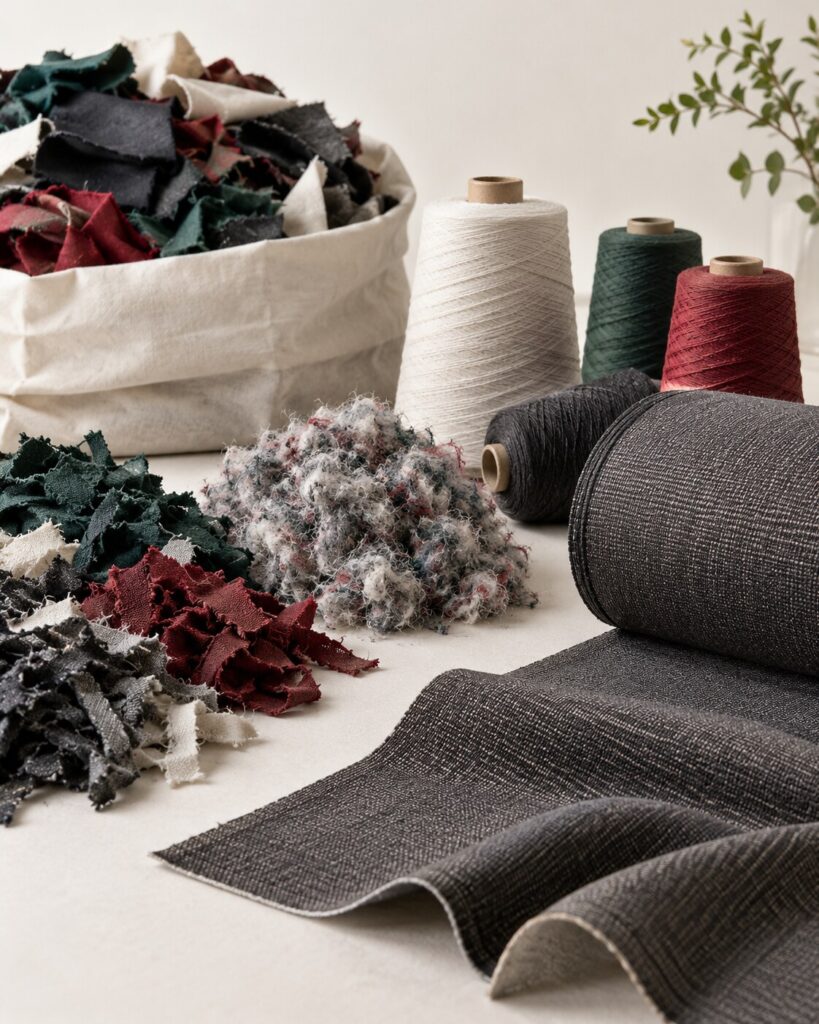
ส่วนประกอบเส้นใย
Composition ต้องระบุทั้งชนิดเส้นใยและสัดส่วนวัตถุดิบรีไซเคิล เช่น 100% Recycled Polyester หรือ 60% Recycled Cotton / 40% Virgin Cotton คำว่า Recycled ไม่ได้แปลว่าเส้นใยทุกส่วนในผ้าเป็นวัสดุรีไซเคิล และผ้าผสมอาจมีทั้งส่วนรีไซเคิลและส่วนใหม่
วัตถุดิบอาจเป็น pre-consumer เช่น เศษจากกระบวนการผลิต หรือ post-consumer เช่น เสื้อผ้าและผลิตภัณฑ์ที่ผ่านการใช้งานแล้ว การสื่อสารควรใช้คำที่ตรงกับเอกสารยืนยันจริง
เรื่องราวของผ้า
การรีไซเคิลสิ่งทอมีทั้งกระบวนการเชิงกลและเชิงเคมี กระบวนการเชิงกลใช้การคัดแยก ตัด ฉีก และเปิดเส้นใยเพื่อนำกลับไปปั่นใหม่ ซึ่งอาจทำให้เส้นใยสั้นลงและต้องผสมเส้นใยใหม่เพื่อช่วยเรื่องความแข็งแรง กระบวนการเชิงเคมีจะสลายหรือทำให้วัสดุอยู่ในรูปที่สามารถสร้างเป็นพอลิเมอร์หรือเซลลูโลสใหม่ได้ แต่เทคโนโลยี ความพร้อม และผลกระทบแตกต่างกันตามชนิดวัสดุ
ระบบรับรองอย่าง Recycled Claim Standard (RCS) ใช้การตรวจสอบจากบุคคลที่สามเพื่อยืนยัน recycled input และการติดตามวัตถุดิบตลอดห่วงโซ่อุปทาน แต่ไม่ได้หมายความว่ามาตรฐานเดียวจะครอบคลุมทุกประเด็นด้านสิ่งแวดล้อม คุณภาพ หรือกฎหมายของผลิตภัณฑ์
คุณสมบัติพิเศษ
- ช่วยหมุนเวียนวัตถุดิบ: นำวัสดุที่กำหนดว่าเป็นของเสียกลับมาเป็นวัตถุดิบอีกครั้ง
- คุณสมบัติขึ้นอยู่กับเส้นใย: Recycled Polyester, Recycled Cotton และ Recycled Nylon มีบุคลิกและข้อจำกัดต่างกัน
- ออกแบบได้หลากหลาย: ทำได้ตั้งแต่ผ้าแฟชั่น ผ้ากีฬา ผ้ากระเป๋า ไปจนถึงสิ่งทอภายในบ้าน
- ตรวจสอบย้อนกลับได้เมื่อมีระบบรองรับ: เอกสาร Scope/Transaction Certificate หรือมาตรฐานที่เกี่ยวข้องช่วยยืนยัน claim ในห่วงโซ่อุปทาน
เหมาะกับการใช้งาน
เสื้อผ้าแฟชั่น Activewear เสื้อยืด Uniform กระเป๋า รองเท้า ซับใน ผ้าหุ้มเบาะ ผ้าม่าน และบรรจุภัณฑ์สิ่งทอ ทั้งนี้ต้องเลือกชนิดเส้นใยและสมรรถนะให้ตรงกับการใช้งาน
ข้อควรทราบ
คำว่า Recycled เพียงอย่างเดียวไม่บอกสัดส่วน แหล่งที่มา คุณภาพ หรือผลกระทบทั้งหมด การรีไซเคิลเชิงกลอาจทำให้เส้นใยสั้นลง ผ้าสังเคราะห์รีไซเคิลยังอาจปล่อยไมโครไฟเบอร์ และผ้าผสมหลายเส้นใยอาจรีไซเคิลซ้ำได้ยาก ควรหลีกเลี่ยงคำว่า 100% sustainable, zero impact หรือ circular โดยไม่มีหลักฐานตลอดวงจรชีวิต
Sustainability & Technical Note
สำหรับ Claim ที่น่าเชื่อถือ ควรเก็บ Composition, แหล่งวัตถุดิบ, ประเภท pre/post-consumer, มาตรฐาน, Scope Certificate และ Transaction Certificate ที่เกี่ยวข้อง มาตรฐาน RCS มีเป้าหมายด้านการยืนยัน recycled input และ chain of custody ส่วนประเด็นด้านเคมี สังคม หรือสิ่งแวดล้อมอื่นต้องตรวจตามขอบเขตของมาตรฐานและเอกสารเพิ่มเติม
Recycled fabric is not one fiber type. It is a broad group of textiles containing recycled inputs, including polyester, nylon, cotton, wool, and regenerated cellulosic feedstocks returned to production.
Fiber composition
Composition should state both the fiber type and the recycled proportion—for example, 100% recycled polyester or 60% recycled cotton / 40% virgin cotton. The word recycled does not mean that every component of the fabric is recycled, and a blend may contain both recycled and virgin inputs.
Feedstock may be pre-consumer, such as manufacturing waste, or post-consumer, such as used garments and products. Communication should match the available verification documents.
The story
Textile recycling can be mechanical or chemical. Mechanical recycling sorts, cuts, shreds, and opens material for respinning; fibers may become shorter and can require blending with virgin fiber for strength. Chemical recycling dissolves or depolymerizes material so that polymer or cellulose can be formed again, but technologies, availability, and impacts differ by material.
Standards such as the Recycled Claim Standard (RCS) use third-party certification to verify recycled input and chain of custody. This does not mean that a single standard addresses every environmental, quality, or legal aspect of the final product.
Special properties
- Keeps material in circulation: returns defined waste material to use as a production input.
- Performance follows the fiber: recycled polyester, recycled cotton, and recycled nylon have different characteristics and limitations.
- Design versatility: suitable for fashion, sportswear, bags, and home textiles.
- Traceability where systems exist: scope and transaction certificates or other relevant documentation can support supply-chain claims.
Suitable applications
Fashion, activewear, T-shirts, uniforms, bags, footwear, linings, upholstery, curtains, and textile packaging—provided the selected fiber and performance suit the intended use.
Important notes
The word recycled alone does not reveal percentage, source, quality, or total impact. Mechanical recycling may shorten fibers, recycled synthetics may still shed microfibers, and multi-fiber blends can be difficult to recycle again. Avoid claims such as 100% sustainable, zero impact, or circular without life-cycle evidence.
Sustainability & Technical Note
For credible claims, retain composition, feedstock source, pre- or post-consumer classification, standard references, scope certificates, and relevant transaction certificates. RCS focuses on verifying recycled input and chain of custody; chemical, social, or other environmental topics must be checked against the scope of the chosen standard and additional evidence.
Sources / แหล่งข้อมูล
- Textile Exchange — Recycled Claim Standard 3.0
- Textile Exchange — Global Recycled Standard
- ISO 14021:2026 — Environmental statements and self-declared claims
ตรวจสอบข้อมูลล่าสุด / Last reviewed: กันยายน 20, 2026