
Hemp: เส้นใยจากลำต้นที่แข็งแรงและมีประวัติยาวนาน
Hemp: A Strong Bast Fiber with a Long History
Hemp หรือเส้นใยกัญชง เป็นเส้นใยจากส่วนเปลือกของลำต้น Cannabis sativa ที่ปลูกเพื่ออุตสาหกรรม มีลักษณะใกล้เคียงลินิน แข็งแรง มีพื้นผิวธรรมชาติ และใช้งานได้ตั้งแต่แฟชั่นไปจนถึงสิ่งทอภายในบ้าน
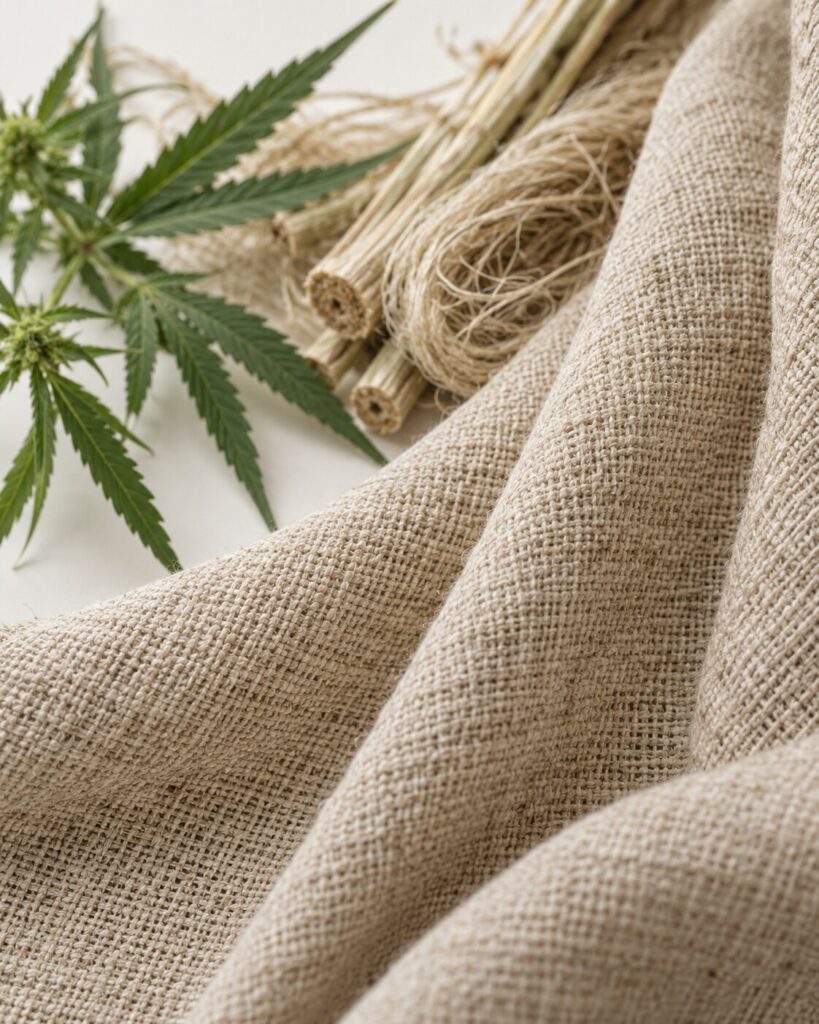
ส่วนประกอบเส้นใย
ผ้า Hemp อาจเป็น 100% Hemp หรือผสมกับ Cotton, Linen, Lyocell, Viscose, Wool หรือเส้นใยสังเคราะห์เพื่อปรับความนุ่ม ราคา การทิ้งตัว และความสะดวกในการปั่นทอ ควรแยกคำว่า Hemp Fiber ออกจาก Hemp-like Fabric เพราะผ้าที่มีหน้าตาคล้ายกัญชงอาจไม่มีเส้นใยกัญชงจริง
เรื่องราวของผ้า
Hemp เป็นเส้นใยประเภท bast fiber ซึ่งอยู่บริเวณเปลือกของลำต้น การผลิตเส้นใยสิ่งทอต้องแยกส่วนเส้นใยออกจากแกนไม้ ผ่านกระบวนการที่อาจประกอบด้วย retting, decortication, cleaning และ combing ก่อนปั่นเป็นด้าย วิธีแปรรูปมีผลอย่างมากต่อความละเอียด สี และความนุ่มของเส้นใย
กัญชงอุตสาหกรรมเป็น Cannabis sativa ที่ปลูกภายใต้ข้อกำหนดด้านปริมาณ THC และเพื่อการใช้งานอุตสาหกรรม ไม่ควรนำภาพลักษณ์หรือคำอธิบายของผลิตภัณฑ์สิ่งทอไปปะปนกับการใช้พืชเพื่อสารออกฤทธิ์
คุณสมบัติพิเศษ
- แข็งแรงและทนทาน: เหมาะกับงานที่ต้องการอายุการใช้งานและคาแรกเตอร์ของเส้นใยธรรมชาติ
- พื้นผิวมีมิติ: ให้ลุคคล้าย Linen ตั้งแต่ rustic ไปจนถึง refined ตามความละเอียดของเส้นใย
- ดูดซับความชื้น: เป็นเส้นใยเซลลูโลสที่ช่วยสร้างความสบายในการสวมใส่
- นุ่มขึ้นตามการใช้งาน: ผ้า Hemp หลายชนิดจะมีสัมผัสผ่อนคลายขึ้นเมื่อผ่านการซักและใช้งาน
เหมาะกับการใช้งาน
เสื้อเชิ้ต แจ็กเก็ต กางเกง เดรส กระเป๋า รองเท้า ผ้าแคนวาส ผ้าม่าน เบาะตกแต่ง ผ้าปูโต๊ะ และผลิตภัณฑ์ lifestyle ที่ต้องการพื้นผิวธรรมชาติ
ข้อควรทราบ
Hemp ที่แปรรูปหยาบอาจมีสัมผัสแข็งหรือมีเส้นใยยื่น สีธรรมชาติและความสม่ำเสมออาจแตกต่างกัน เส้นใยอาจยับและหดได้ตามโครงสร้างผ้า ไม่ควรกล่าวอ้างว่า antibacterial, pesticide-free หรือใช้น้ำน้อยเสมอไปโดยไม่มีหลักฐานเฉพาะของแหล่งผลิต
Sustainability & Technical Note
คณะกรรมาธิการยุโรประบุประโยชน์เชิงเกษตรของ Hemp ในบริบทยุโรป เช่น การเติบโตเร็ว การคลุมดิน การใช้ในระบบหมุนเวียนพืช และในหลายกรณีสามารถหลีกเลี่ยงสารกำจัดศัตรูพืชได้ อย่างไรก็ตามผลลัพธ์จริงขึ้นอยู่กับภูมิภาค วิธีเพาะปลูก การแปรรูป การขนส่ง และการตกแต่งผ้า จึงควรใช้ข้อมูลจากแหล่งผลิตจริงประกอบทุกครั้ง
Hemp is a bast fiber taken from the stem of industrial Cannabis sativa. Similar in character to linen, it is strong, naturally textured, and used across apparel and home textiles.
Fiber composition
Hemp fabric may be 100% hemp or blended with cotton, linen, lyocell, viscose, wool, or synthetics to adjust softness, cost, drape, and spinnability. Distinguish genuine hemp fiber content from a merely hemp-like appearance, as a fabric can look similar without containing hemp.
The story
Hemp is a bast fiber located in the outer part of the stem. Textile production separates the fiber from the woody core through steps that may include retting, decortication, cleaning, and combing before spinning. Processing choices strongly affect fineness, color, and softness.
Industrial hemp is Cannabis sativa cultivated under rules governing THC content and industrial use. Textile communication should not confuse the fiber crop with psychoactive uses of the plant.
Special properties
- Strong and durable: useful for products that need longevity and a natural-fiber character.
- Dimensional texture: can range from rustic to refined depending on fiber fineness and processing.
- Moisture absorbent: as a cellulosic fiber, hemp can contribute to wearing comfort.
- Softens with use: many hemp fabrics develop a more relaxed hand through washing and wear.
Suitable applications
Shirts, jackets, trousers, dresses, bags, footwear, canvas, curtains, upholstery, table textiles, and lifestyle products that call for a natural texture.
Important notes
Coarsely processed hemp may feel firm or show protruding fibers. Natural color and uniformity can vary, and the fabric may crease or shrink depending on construction. Do not claim that a product is antibacterial, pesticide-free, or universally low-water without evidence for its actual supply chain.
Sustainability & Technical Note
The European Commission identifies agricultural benefits of hemp in the European context, including rapid growth, soil cover, crop rotation, and the possibility of avoiding pesticides in many cases. Actual outcomes still depend on region, cultivation, processing, transport, and textile finishing, so claims should be supported by supply-chain-specific evidence.
Sources / แหล่งข้อมูล
- European Commission — Hemp production, environmental context and textile use
- Textile Exchange — Hemp material resource
ตรวจสอบข้อมูลล่าสุด / Last reviewed: กันยายน 20, 2026